
BIGBEAR
PHARMACEUTICAL
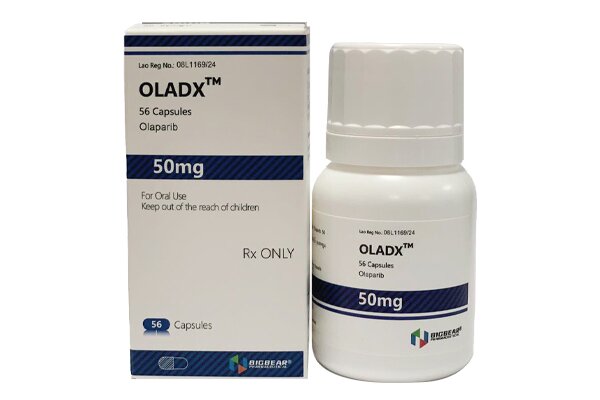

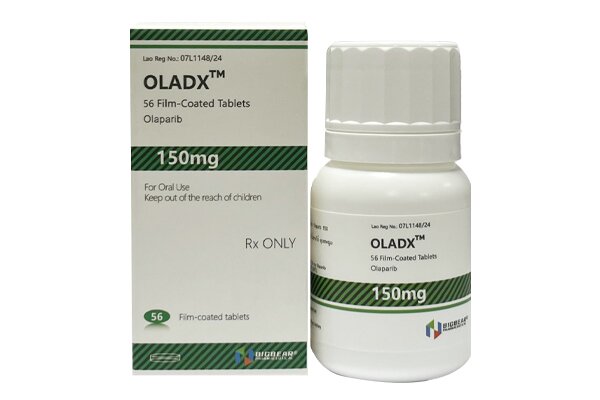
Olaparib has been shown in laboratory studies to prevent cancer cells from repairing themselves, thereby exerting an antitumor effect.

 AuthenticGuaranteeFast DeliveryPrivacy
 Olaparib is an antineoplastic agent belonging to the class of poly (ADP-ribose) polymerase (PARP) inhibitors. PARP enzymes are essential for repairing DNA damage in human cells; when DNA repair capacity is impaired, cancer cells become more susceptible to death.
This medication is primarily indicated for the treatment of patients with specific types of gynecological malignancies:
1.Platinum-sensitive relapsed epithelial ovarian cancer (ovarian surface epithelial carcinoma).
2.Relapsed fallopian tube cancer (carcinoma of the tube connecting the ovary and uterus).
3.Relapsed primary peritoneal cancer (carcinoma of the abdominal lining).
The patient population must meet two conditions:
1.The patient must be an adult.
2.The patient must have achieved a partial response (tumor shrinkage) or complete response (temporary disappearance of the tumor) following platinum-based chemotherapy.
During treatment with olaparib, some patients may experience weakness, fatigue, or dizziness. Patients experiencing these symptoms should avoid driving or operating precision instruments during episodes.
Non-hormonal contraception must be used during treatment, and pregnancy testing should be performed regularly to confirm pregnancy status.
This medication must be swallowed whole. Do not chew, crush, or split the tablets. It can be taken with or without food.
The recommended dose is 300 mg twice daily, which is equivalent to two 150 mg tablets per dose, for a total daily dose of 600 mg. The 100 mg tablets are primarily used for dose reduction purposes.
Treatment must be initiated within 8 weeks after completion of platinum-based chemotherapy and continued until disease progression or unacceptable toxicity occurs.
If intolerable adverse reactions occur (e.g., nausea, vomiting, diarrhea, anemia), consider interrupting treatment or reducing the dose:
First dose reduction: 250 mg twice daily (one 150 mg tablet plus one 100 mg tablet), for a total daily dose of 500 mg.
Second dose reduction: 200 mg twice daily (two 100 mg tablets), for a total daily dose of 400 mg.
Strong or moderate CYP3A inhibitors are contraindicated due to potential increased drug exposure.
1.If co-administration with a strong CYP3A inhibitor is unavoidable, reduce the dose to 100 mg twice daily (one 100 mg tablet), for a total daily dose of 200 mg.
2.If co-administration with a moderate CYP3A inhibitor is unavoidable, reduce the dose to 150 mg twice daily (one 150 mg tablet), for a total daily dose of 300 mg.
Important Reminder: The prescribing information for olaparib may vary between manufacturers. If discrepancies are identified before starting treatment, consult a doctor or pharmacist immediately for confirmation.
During treatment with olaparib, special attention is required:
1.Avoid consuming grapefruit, grapefruit juice, and Seville orange products, as these foods contain CYP3A inhibitor components that may interfere with drug metabolism.
2.Some patients may experience weakness, fatigue, or dizziness after taking the medication. If these symptoms occur, it is recommended to avoid driving or operating precision instruments to ensure safety.
Dizziness and fatigue may occur during treatment. It is recommended to perform these activities only when in good physical condition.
Safety and efficacy data are currently lacking; use is not recommended.
Data on patients aged 75 years and older are limited, but no initial dose adjustment is required.
Mild impairment (creatinine clearance 51–80 mL/min): Use at the normal dose.
Moderate impairment (creatinine clearance 31–50 mL/min): Adjust the dose to 200 mg twice daily.
Severe impairment (creatinine clearance ≤30 mL/min): Use is not recommended.
Mild impairment (Child-Pugh Class A): Use at the normal dose.
Moderate to severe impairment: Use is not recommended.
he following populations are contraindicated from using this medication:
Patients with known hypersensitivity to olaparib or any of its excipients.
Discontinue breastfeeding during treatment and for 1 month after the last dose.
Animal studies have not detected olaparib in breast milk, and human data are lacking. However, due to the drug's properties, it is recommended to suspend breastfeeding during treatment and for 1 month after the last dose.
Confirm non-pregnancy before starting treatment, and use highly effective contraception (e.g., condoms, intrauterine devices) during treatment and for 6 months after the last dose.
Contraindicated throughout pregnancy.
Based on animal studies, olaparib causes severe embryo-fetal harm even at doses lower than the human therapeutic dose. Although there are no data on use in pregnant women, given its mechanism of action, pregnant women and those not using reliable contraception are strictly prohibited from using this product.
If the partner is of reproductive potential or pregnant, use condoms during treatment and for 3 months after the last dose, and do not donate sperm.
Adverse reaction rates cannot be directly compared between different drugs due to varying clinical trial conditions. The following data are derived from clinical studies of maintenance therapy for recurrent ovarian cancer:
The median treatment duration was 19.4 months in the olaparib group vs. 5.6 months in the control group.
45% of patients in the olaparib group required temporary treatment interruption (vs. 18% in the control group), and 27% required dose reduction (vs. 3% in the control group).
The most common reasons for dose adjustment were anemia (22%), neutropenia (9%), and fatigue/asthenia (8%).
11% of patients in the olaparib group required permanent discontinuation (vs. 2% in the control group).
The median treatment duration was 8.7 months in the olaparib group vs. 4.6 months in the control group.
35% of patients in the olaparib group required temporary treatment interruption (vs. 10% in the control group), and 26% required dose reduction (vs. 4% in the control group).
6% of patients in the olaparib group required permanent discontinuation (vs. 2% in the control group).
Anemia typically occurs as early as Week 4, with severe anemia usually detected by Week 7.
In the SOLO-2 study, 43.6% of patients developed anemia, with 19.5% experiencing severe anemia.
Approximately 55% of patients developed macrocytosis (increased red blood cell volume), which resolves after discontinuation.
Recommendation: Check complete blood count before initiating treatment and monthly thereafter.
Approximately 15% of patients developed a significant increase in serum creatinine levels.
The overall median increase was 23% and persisted during treatment, but resolved after discontinuation.
Nausea usually occurs within the first month of treatment.
Vomiting typically occurs within the first two months.
Discontinue olaparib immediately if any of the following occur:
1.Diagnosis of myelodysplastic syndrome (MDS) or acute myeloid leukemia (AML).
2.Development of new or worsening respiratory symptoms (e.g., dyspnea, persistent cough, fever) that are confirmed to be non-infectious pneumonia.
Important Note: If the above respiratory symptoms or abnormal chest imaging findings occur, treatment should be temporarily suspended and medical evaluation should be sought promptly. If non-infectious pneumonia is confirmed, permanent discontinuation of olaparib and appropriate treatment are mandatory.
If any issues arise, please contact us immediately.
Email:laosbigbear@gmail.com

Olaparib is rapidly absorbed after oral administration. In most people, the drug concentration in the blood reaches its maximum level approximately one and a half hours after taking it.
However, there is currently no clear authoritative data on how long it specifically takes to begin exerting its therapeutic effect.
After a single 300 mg dose of olaparib, the average time for the drug concentration in the blood to decrease from its peak value by half is 14.9 hours (with a fluctuation of approximately ±8.2 hours). However, there is similarly a lack of authoritative research data on the duration of its continuous therapeutic effect.
If you forget to take your medication on time, do not take a missed dose. Simply take the next scheduled dose at your regular time. It is particularly important not to increase your single dose to make up for a missed one.
Currently, no clear clinical manifestations of overdose have been identified. There have been isolated cases where patients took 900 mg of olaparib tablets daily for two consecutive days without experiencing unexpected adverse reactions.
If an overdose occurs, the doctor will provide symptomatic treatment based on the specific situation and offer necessary supportive care.
Copyright2024@ BIGBEAR All right reserved Bigbear | Bigbear Pharmaceutical | Bigbear Laos


